

Where Winds Meet Mobile: can a large-scale wuxia open world really work on smartphones?
Where Winds Meet Mobile is one of the most ambitious wuxia projects ever announced for mobile devices. Originally revealed as a large open-world action RPG for PC and consoles, the mobile version aims to preserve the same philosophical depth, martial arts culture and systemic freedom while adapting to the technical and ergonomic limits of smartphones. As of 2025, the question is no longer theoretical: hands-on tests, official demos and developer disclosures provide enough data to assess how realistic this vision truly is.
Technical foundations of the mobile version
The mobile edition of Where Winds Meet is built on a heavily customised engine derived from Unreal Engine, redesigned to support scalable assets, dynamic level streaming and adaptive physics calculations. Developers confirmed that the world is not segmented into isolated zones, but streamed in real time, allowing continuous exploration without loading screens on supported devices.
To achieve this, the game dynamically adjusts texture resolution, draw distance and environmental density based on device performance. High-end smartphones released between 2023 and 2025 are capable of running the game with advanced lighting and complex animations, while mid-range devices rely on simplified shaders and reduced NPC counts without altering core gameplay systems.
Thermal management has been a key focus. Extended play sessions trigger intelligent performance throttling rather than sudden frame drops, ensuring stability during combat-heavy encounters. This approach reflects lessons learned from earlier open-world mobile titles that struggled with overheating and battery drain.
Hardware requirements and device compatibility
According to official specifications, the recommended configuration includes at least 8 GB of RAM and a modern ARM-based GPU capable of Vulkan API support. Devices equipped with Snapdragon 8 Gen 2, Apple A17 or equivalent chipsets deliver the most consistent experience, especially during large-scale battles involving multiple AI factions.
Lower-tier devices are not excluded, but players must accept limitations such as capped frame rates and reduced environmental interaction. Importantly, gameplay logic remains intact, meaning combat mechanics, skill systems and narrative progression are not locked behind hardware tiers.
This inclusive approach expands the potential audience while maintaining transparency about performance expectations, a practice that has become increasingly important in the mobile gaming market.
Open-world design and wuxia philosophy on mobile
Where Winds Meet does not follow the traditional quest-marker-driven structure typical of many mobile RPGs. Instead, it embraces wuxia storytelling through environmental cues, character encounters and emergent events. Players are encouraged to interpret the world rather than simply follow instructions.
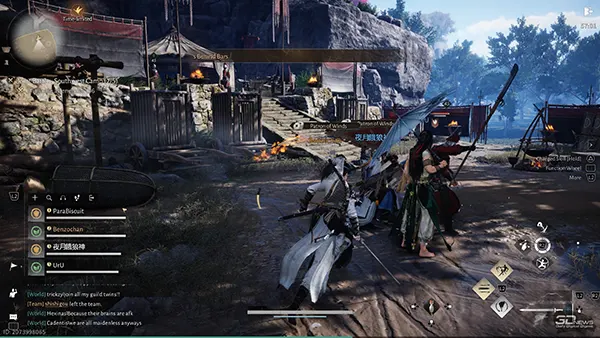
The mobile interface has been carefully redesigned to support this philosophy. Context-sensitive controls reduce on-screen clutter, while gesture-based inputs allow fluid martial arts movement without overwhelming the player. The result is a control scheme that prioritises intention over precision tapping.
Verticality plays a major role in exploration. Wall-running, rooftop traversal and momentum-based movement have been preserved from the PC version, proving that complex traversal systems can function on touchscreens when designed from the ground up.
Combat depth and martial arts systems
Combat in Where Winds Meet Mobile is not simplified for the sake of accessibility. Each martial arts school features distinct timing windows, stance interactions and counter mechanics. Players must read enemy behaviour rather than rely on automated systems.
Touch controls are supplemented by optional controller support, but the default layout allows chaining attacks, parries and evasive manoeuvres with a surprising degree of precision. Feedback through animation and sound design compensates for the absence of physical buttons.
This design choice reinforces the core wuxia theme: mastery is earned through understanding and practice, not through numerical power alone.
Progression systems and long-term engagement
Character progression is intentionally non-linear. Instead of traditional level grinding, players develop skills through usage, philosophical alignment and narrative choices. This system translates well to mobile play patterns, allowing meaningful progress during shorter sessions.
Crafting, meditation and relationship-building mechanics provide alternative progression paths. These systems encourage players to interact with the world at their own pace rather than focusing exclusively on combat efficiency.
Daily activities exist but are optional and designed to complement exploration rather than replace it. This avoids the fatigue commonly associated with mobile progression loops.
Monetisation model and player trust
As of 2025, the developers have confirmed that Where Winds Meet Mobile follows a premium-first philosophy with optional cosmetic purchases. There are no systems that directly sell combat power or narrative advantages.
Cosmetic items focus on clothing styles, weapon aesthetics and emotes inspired by historical wuxia traditions. These elements enhance personal expression without affecting gameplay balance.
This approach aligns with long-term player trust and reflects a broader shift in mobile development towards sustainable monetisation models that respect player investment.