
Vampire Crawlers on iOS: Deck Building, Ability Combos and Procedural Dungeons
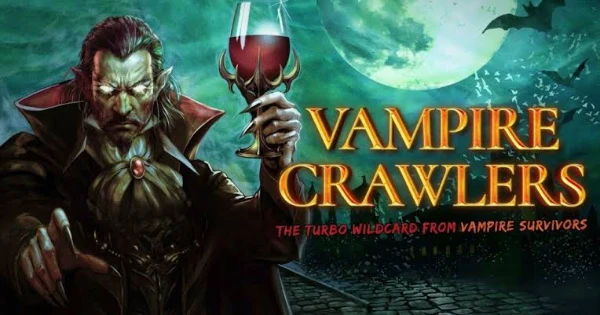
Vampire Crawlers: The Turbo Wildcard from Vampire Survivors arrived on iOS on 12 October 2026, bringing a different approach to the monster-filled universe created by poncle. Developed by poncle and Nosebleed Interactive, this turn-based roguelite combines card collection, tactical combat and first-person dungeon exploration. Rather than surviving continuous waves of enemies through automatic attacks, players assemble decks, arrange powerful combinations and explore multi-floor dungeons filled with monsters, treasures and unexpected encounters. The iPhone and iPad version includes the complete game alongside the Death Parade update, giving mobile players access to additional characters, cards and challenges from its release.
Building Effective Card Decks in Vampire Crawlers
Deck building determines how effectively a character handles combat in Vampire Crawlers. Each playable character, known as a Crawler, influences the cards available at the beginning of an adventure. As players defeat enemies and collect experience, they gain levels and obtain additional cards that expand their combat options. Some cards deal direct damage, others improve defensive capabilities, while certain abilities strengthen subsequent attacks or provide additional resources. A successful deck therefore needs more than powerful weapons. Its cards must work together, allowing players to establish reliable combinations without constantly struggling to find the right abilities.
The first important decision is selecting a Crawler whose starting abilities match the intended strategy. Different characters encourage different approaches to combat, and experimenting with their initial decks reveals which weapons and effects are easiest to combine. A straightforward offensive deck can be useful during early dungeon runs, particularly when players are still learning how card sequencing works. However, adding every available attack eventually becomes counterproductive. A large collection of unrelated cards can make it harder to draw the combinations needed for consistent damage. Choosing upgrades that complement existing abilities generally produces a more dependable result than collecting cards simply because their individual effects appear impressive.
Card acquisition is closely connected to dungeon progression. Experience earned during encounters provides opportunities to develop the deck, while treasure chests contain useful rewards, including customisation gems and power-ups. These gems can modify the properties of cards, making particular weapons more effective or improving their usefulness within a combination. Players should examine how each new reward interacts with their current collection before committing to an upgrade. A modest improvement to an ability used repeatedly throughout a battle may contribute more damage than an isolated powerful card. This becomes especially relevant during longer expeditions, when enemies demand increasingly effective combinations and a poorly organised deck can lose its effectiveness.
Choosing Cards, Upgrades and Weapon Evolutions
One of the most useful deck-building principles is maintaining a clear balance between attack cards, supporting abilities and cards that help sustain longer combinations. Offensive cards provide the damage necessary to defeat enemies, but their effectiveness depends on when they can be played. Support cards can improve the strength or frequency of attacks, while mana-related abilities influence how players assemble their sequences. A deck containing several complementary effects has more opportunities to produce meaningful combinations than one relying entirely on a single expensive weapon. When choosing between rewards, consider whether the new card fills a genuine weakness or merely duplicates something already available.
Weapon evolutions offer another important direction for character development. As in Vampire Survivors, certain weapons can develop into more powerful forms when the relevant requirements are met. This makes planning upgrades worthwhile rather than treating every level-up reward as an independent decision. Players who identify a promising weapon early can prioritise upgrades that support its development and create a stronger foundation for later encounters. Nevertheless, focusing exclusively on one evolution can leave a deck vulnerable when the necessary supporting cards are unavailable. Keeping alternative attacks and useful defensive options provides greater flexibility, particularly against enemies that survive the opening combination.
Permanent progression also influences deck-building decisions between expeditions. After returning to the village, players can purchase power-ups that improve their chances during subsequent runs. These upgrades help establish a stronger starting position, reducing the pressure to obtain specific rewards immediately. It is worth checking the village after every expedition rather than repeatedly entering dungeons with unchanged abilities. The most effective long-term approach combines permanent improvements with experimentation: develop a dependable starting deck, test different Crawlers, compare weapon combinations and gradually identify the upgrades that consistently improve performance. This approach reduces reliance on unusually favourable rewards and makes difficult encounters more manageable.
Mastering Ability Combinations and TurboTurn Combat
Combat in Vampire Crawlers revolves around TurboTurn, a system that combines the deliberate decisions of turn-based games with unusually fast execution. Players select cards from their available hand and arrange attacks into combinations that resolve in sequence. Unlike conventional action games, success does not depend on constantly reacting to enemy movements or tapping faster than an opponent. A player can examine the available cards and plan a sequence before committing to an action. Alternatively, experienced players can execute turns rapidly once they understand their preferred combinations. The underlying combat rules remain consistent regardless of how quickly those decisions are made.
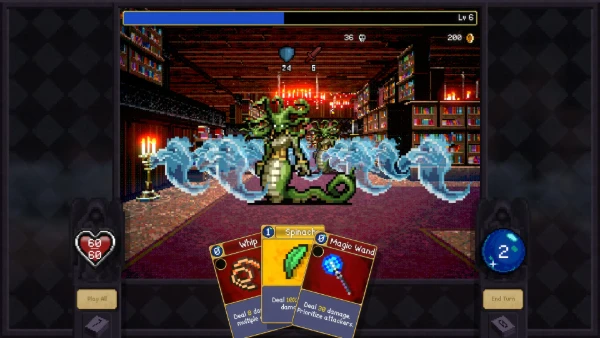
The central mechanic involves playing cards in ascending mana order. When cards are arranged correctly, they form a combo in which successive steps increase the effectiveness of the following card. This creates opportunities to turn relatively ordinary attacks into substantial bursts of damage. For example, a sequence beginning with a low-cost card and continuing through progressively higher costs can strengthen an attack placed towards the end. The strongest individual card is therefore not necessarily the best opening move. Its position within the sequence can matter more than its immediate damage value, particularly when several preceding abilities have already increased the combo’s effectiveness.
Wild cards introduce additional flexibility by allowing combinations to continue beyond what an ordinary sequence might permit. Used at the right moment, they help extend the chain and increase the potential impact of subsequent abilities. The official game description encourages players to experiment with combinations reaching ten, twenty or even thirty steps, although creating such sequences depends on the available cards and effects. Building a long combo is not automatically the best decision in every encounter. Players must still consider which enemies require attention, whether sufficient resources remain available and whether the sequence contains attacks capable of dealing meaningful damage. A shorter, well-constructed combination can sometimes serve the immediate situation better.
Combining Mana, Wild Cards and Special Abilities
Understanding mana costs is essential for creating effective combat sequences. Each card has its own requirements, and arranging cards in increasing cost order helps activate the combo system. Players should examine their entire hand before choosing the opening attack, looking for an opportunity to establish a gradual progression towards their strongest ability. Playing an expensive card too early may prevent other available cards from contributing to the same chain. Conversely, starting with a low-cost attack can provide room for several additional steps. A practical approach is to identify the most valuable finishing effect first, then determine which preceding cards can build towards it.
Special abilities become particularly valuable when they extend combinations or generate additional effects without requiring an entirely new sequence. Summoned survivors can trigger cascades of attacks, while suitable card interactions can amplify the damage produced by an established chain. The Death Parade update, available on iOS from launch, expands these possibilities with new weapons, gems, Arcanas and additional combat mechanics. One example is Karoma’s Mana, a card introduced with the update that can switch a card while returning the mana spent at its base cost. Its Adaptability mechanic can change its cost according to the previous card added to a combo, creating additional opportunities for carefully planned sequences.
Death Parade also introduces effects that reward particular types of attacks. Crit Explosion allows critical hits to produce explosions that can themselves cause further critical effects, while Roaring increases area damage as an attack spreads between enemies. These mechanics illustrate why card combinations should be evaluated as connected systems rather than individual abilities. A weapon that strikes several opponents may become significantly more useful when paired with effects that reward spreading damage. Likewise, abilities associated with critical hits can benefit from improvements that increase their frequency or impact. The strongest combinations emerge when several compatible effects reinforce one another, making every subsequent action more valuable than the previous one.
Exploring Procedurally Generated Dungeons on iPhone and iPad
Dungeon exploration gives Vampire Crawlers its structure between battles. Players move through first-person environments containing interconnected rooms, corridors, enemies and hidden rewards. Each dungeon extends across multiple floors, encouraging exploration while gradually increasing the demands placed on the character’s deck. The game combines designed environments with variable layouts and encounters, so players cannot assume that every expedition will unfold in exactly the same way. Although the overall objectives remain familiar, the location of useful rewards and the sequence of encounters can influence how a run develops. Successful exploration therefore requires attention to both the current surroundings and the condition of the deck.
Progress through a dungeon involves defeating enemies, collecting experience, investigating treasure chests and locating the means to reach subsequent floors. One distinctive interaction is finding a shovel that allows the character to dig towards the next level, sometimes leading to environments that are considerably stranger than an ordinary underground passage. The movement system also allows players to interact with objects by approaching or headbutting them, turning exploration into an active source of resources rather than a simple journey between battles. Searching thoroughly can provide useful improvements, but players should also consider whether additional encounters offer worthwhile rewards relative to the risks involved.
The roguelite structure makes repeated expeditions an expected part of progression. An unsuccessful attempt does not necessarily mean that all progress has been wasted, because permanent upgrades and newly available options can strengthen later runs. However, players should distinguish between improvements that persist between adventures and temporary cards or effects obtained during an individual expedition. Each run presents opportunities to develop a particular combination, but that combination may not be immediately available during the next attempt. This is why adaptable deck-building strategies are valuable. Learning how to work with different rewards makes progression more consistent than depending on an identical collection of cards every time.
Dungeon Progression, Death Parade Challenges and iOS Features
Exploring efficiently begins with understanding what each encounter contributes to the current expedition. Fighting enemies provides experience, while chests and other interactive objects can supply resources needed to strengthen the deck. When approaching a difficult encounter, review the available cards and consider whether the current combination can eliminate weaker opponents before they become a problem. Maintaining several useful attack options is particularly important when a dungeon contains different enemy groups. There is little benefit in developing an impressive combination that cannot be assembled reliably. Players who assess their deck after major rewards are better prepared to adjust their approach before reaching a difficult boss.
The Death Parade expansion adds further variety through one additional stage, three new dungeons and two additional Crawlers, alongside new weapons, gems, Arcanas and Relics. Among its notable features are mechanics involving discarded cards and limits on hand size. These introduce different considerations from the standard approach of accumulating increasingly powerful combinations. Some challenges encourage players to consider which cards should remain available and which can be discarded to support other effects. New post-game locations, including Moongolow and Moongohigh, become relevant after the final boss. Certain Relic effects can also be enabled or disabled after they have been unlocked, allowing players to adjust how these mechanics influence subsequent adventures.
On iOS, Vampire Crawlers supports iPhone and iPad devices running iOS 18.6 or iPadOS 18.6 or later. The game operates in landscape orientation and supports compatible PlayStation, Xbox and MFi controllers alongside its mobile controls. Once downloaded, it can be played without an internet connection, although connectivity remains necessary for installation and updates. The mobile release is a premium purchase, listed at £9.99 in the UK at launch, without advertisements or in-app purchases. Save sharing is supported between compatible Apple devices, but transferring progress from PC or consoles is not available at launch. Together, these features make the complete dungeon-crawling experience accessible on mobile without requiring a permanent connection or a separate purchase of Vampire Survivors.