
Rainbow Six SMOL — Can Tactical Gameplay Be Simplified Without Losing Identity?
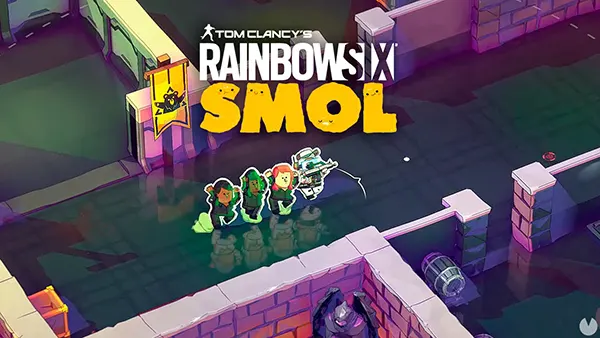
The release of Rainbow Six SMOL raises a difficult question for modern game design: how far can you simplify a complex tactical shooter before it stops feeling like itself? Ubisoft’s original Rainbow Six formula has always relied on tension, planning, and consequence-driven decisions. In 2026, however, mobile-first adaptations and casual audiences push developers to rethink that formula. SMOL attempts to translate methodical gameplay into a lighter format without stripping away the core identity that made the series distinctive.
Why Rainbow Six Became a Benchmark for Tactical Depth
Rainbow Six built its reputation on precision rather than speed. Unlike traditional shooters, success depended on positioning, map knowledge, and coordination. Each operator had a defined role, and a poorly planned entry could end a round in seconds. This emphasis on consequences created a learning curve that rewarded patience and attention to detail.
Another defining feature was environmental interaction. Destructible walls, vertical gameplay, and sound-based awareness made each match unpredictable. Players were not simply reacting—they were anticipating. This level of control over the environment distinguished Rainbow Six from arcade-style shooters that prioritised reflexes over strategy.
By 2026, this design philosophy remains influential. Many competitive shooters borrow elements of tactical pacing, but few replicate the same balance between realism and playability. This legacy sets a high expectation for any spin-off, including SMOL, which must reinterpret these mechanics for a broader audience.
What Elements Define the Series Identity
The identity of Rainbow Six is not tied to graphics or scale but to decision-making under pressure. Players must gather information, coordinate with teammates, and commit to a plan. Even small choices—such as where to place a gadget—can determine the outcome of a round.
Operator abilities also play a critical role. They are not cosmetic additions but strategic tools that shape how matches unfold. Removing or oversimplifying these abilities risks turning the game into a generic shooter rather than a tactical experience.
Finally, pacing is essential. Rainbow Six thrives on tension, where silence and waiting can be as impactful as action. Any simplified version must preserve this rhythm, even if mechanics are streamlined for accessibility.
How Rainbow Six SMOL Adapts the Formula for Simpler Gameplay
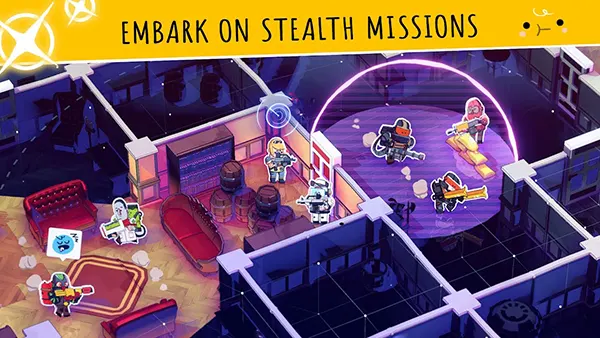
Rainbow Six SMOL introduces a more compact structure designed for shorter sessions. Matches are faster, maps are scaled down, and controls are simplified for mobile and casual play. This shift reflects current player behaviour, where accessibility and time efficiency often take priority.
The control scheme is one of the most noticeable changes. Complex actions are reduced to fewer inputs, allowing players to focus on positioning rather than execution. While this lowers the entry barrier, it also risks reducing the skill ceiling that long-time players expect.
SMOL also adjusts operator mechanics. Abilities are streamlined to be more intuitive, with fewer variables to manage. This makes the game easier to understand but changes how strategies develop during matches. The challenge lies in maintaining meaningful choices without overwhelming new players.
Where Simplification Works—and Where It Struggles
Simplification works best when it removes friction without eliminating depth. In SMOL, quicker rounds and clearer objectives make the experience more approachable. New players can grasp the basics within minutes, which is crucial for mobile gaming success.
However, some compromises are more noticeable. Reduced environmental complexity limits creative strategies, and fewer tactical options can make matches feel repetitive over time. For experienced players, this may reduce long-term engagement.
The balance between accessibility and depth is delicate. If the game becomes too simple, it risks losing its identity. If it remains too complex, it fails to attract a broader audience. SMOL operates in this narrow space, attempting to satisfy both sides.
The Future of Tactical Shooters in a Mobile-First Era
The success of Rainbow Six SMOL reflects a broader trend in the industry. Developers are increasingly adapting complex genres for mobile devices, where session length and usability shape design decisions. Tactical shooters, once considered niche, are now being reimagined for wider audiences.
This shift does not necessarily mean a loss of depth. Instead, it challenges developers to rethink how complexity is delivered. Layered mechanics, gradual learning curves, and adaptive difficulty systems are becoming more common in modern design.
For established franchises, the key question is consistency. Players expect recognisable mechanics, even in simplified versions. Maintaining a connection to the original experience is essential for long-term credibility.
Can Identity Survive Simplification?
Identity in game design is not defined by complexity alone. It is shaped by how systems interact and how players make decisions. If a simplified version retains meaningful choices and strategic consequences, it can still feel authentic.
Rainbow Six SMOL demonstrates that simplification is possible, but not without trade-offs. Some depth is inevitably lost, yet the core idea of tactical thinking remains. This suggests that identity can evolve rather than disappear.
Looking ahead, the future of tactical gameplay may lie in flexible design. Games that offer both accessible entry points and deeper layers for experienced players are more likely to succeed. SMOL is an early example of this approach, and its reception will influence how other franchises adapt in the coming years.