
The Division Resurgence in 2026: what the mobile spin-off gets right, and what still needs work
The Division Resurgence is Ubisoft’s mobile take on the well-known looter-shooter formula: cover-based gunfights, character builds, and a constant chase for better gear. By 2026, the project is still widely associated with ongoing development and extended testing rather than a fully settled, globally launched product in every region. That reality shapes expectations: the game already shows a recognisable “Division” identity on mobile, but several elements — especially balance, long-term progression and competitive modes — still depend on how Ubisoft finalises the experience.
A familiar Division feel — adapted for mobile without becoming simplistic
The strongest argument in favour of Resurgence is that it does not try to reinvent what makes The Division work. Combat remains rooted in cover, positioning and timing. You are rewarded for reading the battlefield, moving smartly between cover points, and using skills at the right moment rather than simply spraying bullets. That tactical rhythm is important on mobile because it reduces the need for perfect mechanical accuracy and gives players room to win through decisions.
The mission structure also feels designed for phone sessions. You can make meaningful progress in short bursts, but longer sessions remain worthwhile because loot, upgrades and side activities keep feeding into your build. In other words, it aims to support both quick plays and longer “sit down with a tablet” sessions. This is a crucial distinction because many mobile shooters either feel too shallow for long play or too exhausting for casual sessions.
Resurgence also retains the franchise’s atmosphere: urban spaces that feel tense and damaged, factions that create recognisable threats, and the sense of operating inside a world that is always a little hostile. Even when you are just clearing a standard activity, the mood matters. It helps the game feel like an actual entry in The Division universe rather than a generic mobile shooter wearing a famous name.
Controls, pacing, and why the gunplay can work on a touchscreen
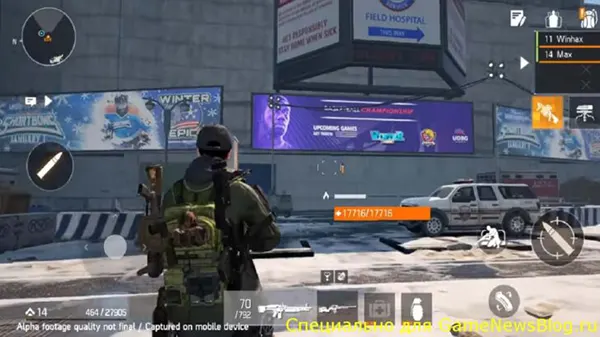
Mobile controls are always a risk for a cover shooter, yet Resurgence seems built around reducing friction. Movement and cover transitions are designed to be readable and consistent, which matters because tiny input mistakes on a touchscreen can be costly. The best mobile action games are not the ones that demand perfect precision — they are the ones that give you reliable tools to execute a plan. Resurgence leans into that principle.
Gunfights are structured to encourage rotation and decision-making. Enemies flank, push, throw grenades and force you to reposition. That makes encounters feel active rather than static, and it helps avoid the “hide behind one wall and tap until it’s over” problem that weaker mobile shooters fall into. When a game asks you to move and adapt, it also makes your build choices feel more meaningful.
The pacing of combat is generally built around clarity: you have time to recognise threats, respond to skill usage, and understand why you are losing if you make poor choices. That is not just a comfort feature — it is essential for a mobile audience where distractions, smaller screens and variable performance can otherwise turn fights into chaos.
Loot, builds and progression: the real reason players will stay
The Division series lives and dies by its progression systems, and Resurgence clearly wants that same long-term pull. Your power is not only about weapon level — it comes from the way your gear pieces, attributes and talents combine into an effective build. The game pushes you to think like a role-based shooter: you can lean into damage, survivability, skill usage or team support, and each direction creates a different rhythm in combat.
Build crafting is where the mobile format can actually help. Because the loop is compact, you can adjust gear, test a setup, run an activity, and see results quickly. For many players, that creates a satisfying cycle of experimentation. When you feel that a small tweak improves your performance, the grind becomes purposeful rather than repetitive.
The key question for 2026 is how fairly the progression curve is tuned. Looter-shooters need a careful balance between time investment and reward. If the best gear feels unattainable without excessive grinding, casual players drop out. If top-tier loot comes too easily, the long-term chase collapses. Resurgence looks like it is still being refined in this area, and the final shape of progression will likely define whether it becomes a long-running mobile title or a short-lived curiosity.
How to approach loot smartly and avoid “wasted grinding”
The most practical way to play any Division-style game is to treat loot as a tool for synergy, not a pure numbers race. A higher stat is not always “better” if it breaks your build logic. For example, stacking damage at the cost of survivability can make you weaker overall if you spend more time downed than shooting. Resurgence encourages this kind of thinking because combat quickly punishes unbalanced setups.
Another useful approach is to build around the content you actually enjoy. If you prefer solo play, you will need consistency and self-reliance: healing options, reliable damage and mobility. If you prefer team play, you can specialise harder because squadmates cover weaknesses. The best loot plan is the one that matches your habits, not the one copied from a theoretical “perfect build” that does not suit your style.
Finally, keep your expectations flexible. Games in extended development and testing can shift balance, drop rates and progression pacing. What feels optimal now may not be optimal after the next major update. Players who treat builds as evolving projects — rather than fixed targets — tend to get more enjoyment and less frustration from the grind.
Co-op, PvP, and the Dark Zone idea: where Resurgence aims for true Division tension
Co-op has always been the heart of The Division experience, and Resurgence seems designed to keep that identity intact. Playing with others transforms the game from a standard shooter into a tactical role-based experience. In a coordinated squad, players can run complementary builds: one focuses on damage, another controls space with skills, another plays support. When it works, the game feels richer than most mobile shooters because teamwork is not cosmetic — it is functional.
Competitive modes and PvP are where the stakes rise. The Division-style formula thrives when you mix player skill with build knowledge, but PvP also exposes balance issues faster than anything else. In mobile environments, this is even more sensitive because differences in device performance, connection stability and control comfort can distort outcomes. If Ubisoft wants Resurgence to maintain a healthy competitive ecosystem, it must keep matchmaking and balance strict and transparent.
The Dark Zone concept — a PvPvE space where you fight enemies, hunt valuable loot and risk other players stealing it — is the most “Division” part of the whole package. It creates emotional spikes: tension, paranoia, sudden alliances, betrayal and clutch escapes. It also creates the biggest design challenge, because if the zone becomes dominated by highly coordinated squads, many players will treat it as hostile territory and avoid it entirely.
Why the Dark Zone matters — and what could undermine it on mobile
The Dark Zone matters because it creates stories rather than routines. In normal activities, you usually know what will happen: clear objectives, collect rewards, move on. In a PvPvE environment, outcomes are unpredictable. You might spend ten minutes earning a high-value item and then lose it at extraction. Or you might survive an ambush by improvising with strangers. Those moments are why people remember The Division.
The risk on mobile is accessibility. If the Dark Zone becomes too punishing, casual players will not engage. If it becomes too safe, it loses its identity. Finding the correct level of threat is difficult in any game, but especially in one that may have a wide audience range from hardcore Division veterans to mobile-first players who have never touched the series.
In 2026, the most honest summary is this: The Division Resurgence already looks capable of delivering a credible Division experience on mobile, particularly in its combat feel and build-driven progression. The long-term success, however, will hinge on how Ubisoft finalises progression pacing, competitive balance and the Dark Zone’s risk-reward loop. If those systems are tuned with care, Resurgence can stand out in the mobile shooter market. If they are not, it may struggle to hold players beyond the early novelty phase.