
Duet Night Abyss on Android: Can Fast 3D Combat and Multiple Weapon Types Really Work on a Touchscreen?
Duet Night Abyss asks rather more from a phone screen than the average mobile action RPG. Pan Studio built its combat around quick movement, close-range attacks, firearms, aerial actions and instant changes between different weapon categories, so the Android version has to place a fairly complex set of actions under two thumbs. Since its global release on 28 October 2025, the game has continued to receive new areas, characters and weapons, and by September 2026 its combat system is considerably broader than a simple combination of an attack button and a virtual joystick. The central question for Android players is therefore not whether the full combat system exists on mobile, but whether its speed and variety remain comfortable when physical keys, a mouse and extra screen space are removed from the equation.
How Duet Night Abyss Adapts Fast 3D Combat to Android
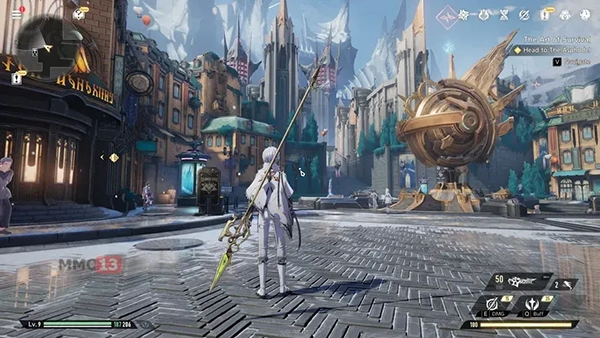
The basic Android control layout follows a familiar mobile action-game structure. Movement is handled with a virtual stick on the left side of the display, while attacks, movement actions and character abilities occupy the right. That sounds straightforward until a battle becomes crowded. Duet Night Abyss regularly asks the player to move, adjust the camera, select a target, attack, dodge and prepare another action within a few seconds. Unlike a slower RPG in which attacks can be queued almost independently of movement, the game rewards constant repositioning, so the right thumb frequently has to move between several controls while the left keeps the character in motion.
The system works because the combat itself has been designed around momentum. Characters are not restricted to standing on the ground and exchanging ordinary attack strings. Players can combine close-range strikes with ranged fire, jump into aerial attacks, perform plunging attacks and use the game’s agile traversal mechanics to change position rapidly. There is no traditional stamina meter constantly interrupting basic movement, which helps the game maintain its pace. On a touchscreen, this produces an unusually active form of mobile combat: encounters feel closer to a third-person action game than to a conventional tap-focused mobile RPG.
The trade-off is screen density. A larger phone gives the controls room to breathe, while a compact display can make several buttons compete for the same portion of the screen. The problem becomes more noticeable when enemies approach from different directions because the player must divide attention between the battlefield and the control icons. Community feedback since release has been mixed on this point. Some players have found the touch layout manageable after learning its rhythm, while others have reported missed inputs and awkward aiming during busy encounters. That difference is important: the mechanics do function on Android, but comfort depends heavily on screen size, device performance and the player’s familiarity with touch-based action games.
Movement and Camera Control Are Just as Important as Attacking
Duet Night Abyss would be easier to adapt to a phone if combat consisted mainly of pressing attack buttons, but movement is one of its defining features. Characters can jump, slide, change elevation and use Helix Leap to travel through environments with considerably more freedom than the standard run-and-dodge movement of many mobile RPGs. These actions also matter during fights. Creating distance before using a ranged weapon, moving above a group of enemies or rapidly closing the gap for a melee attack can all become part of the same encounter.
That freedom makes camera control particularly significant. On Android, the player normally uses the right side of the screen both to turn the camera and to access combat actions. During ordinary movement this arrangement is easy enough to understand, but battles can force the right thumb to alternate quickly between camera adjustments and buttons. Ranged weapons add another layer because aiming is naturally more demanding than broad melee attacks. Accurate shots against a single target are practical, although they require more deliberate finger movement than swinging a sword or another close-range weapon into a group.
The result is a control scheme that becomes better with familiarity rather than one that feels completely natural from the first encounter. Early fights can seem crowded because the player is still locating buttons by sight. Once those positions become familiar, much of the interaction shifts to muscle memory and the pace improves noticeably. Even then, the physical limits of a touchscreen remain. A phone cannot provide the same number of separate inputs as a keyboard and mouse without placing more functions under fewer fingers, so the Android version succeeds mainly by making a complicated combat system workable rather than by making every action equally effortless.
Switching Between Melee and Ranged Weapons Changes the Rhythm of Battles
The most distinctive part of Duet Night Abyss combat is the ability to move between melee and ranged weapon styles instead of locking every character permanently into one narrow weapon category. The official Android description specifically presents weapon switching as a core feature. Depending on the character and available equipment, players can work with weapon families that include swords, dual blades, whipblades, crossbows, dual pistols, assault-style firearms, sniper rifles, grenade launchers and other specialised ranged choices. The purpose is not simply to increase the number of items available; it is to let close- and long-range attacks occupy different roles within the same fight.
This becomes useful when enemy placement changes. A close group may be dealt with efficiently through melee combinations, while enemies positioned farther away can be targeted without first running across the entire arena. A ranged option can also give the player breathing room after a dodge or rapid movement sequence. Conversely, staying at distance is not always the most practical choice when several opponents close in at once. Switching back to melee can turn what would otherwise be an awkward aiming situation into a much more direct exchange.
The September 2026 version shows that Pan Studio is still expanding this principle rather than treating it as a launch-only feature. The Paradise’s 22nd White Bunny update introduced Falsi, whose listed proficiencies are Dual Blades and Dual Pistols, alongside weapons including the Stifled Howl Dual Blades, Sanguis Sanctus – Whipblade and the Sanguine Plume Calamity Weapon. This matters because the continuing addition of contrasting weapon types keeps the melee-versus-ranged decision relevant. The game is not built around finding one universal weapon and ignoring the rest; character capabilities, enemy placement and the player’s preferred combat distance continue to shape which tools feel comfortable.
Why Weapon Variety Makes More Sense on Touch Than It First Appears
Putting several weapon styles into a touchscreen action game sounds as though it should make the controls unnecessarily complicated, yet Duet Night Abyss avoids part of that problem by keeping the basic combat language consistent. Players do not need to learn a completely new interface every time they move from a blade to a firearm. The major difference is how the weapon is used in space. Melee attacks reward positioning near an enemy, while ranged choices make aiming and line of sight more important. The player therefore learns when to change approach rather than memorising a separate mobile control scheme for every individual weapon.
Melee weapons are generally the easier side of the system on a phone. Their effective area can make small camera inaccuracies less punishing, particularly when fighting groups. Ranged combat demands more precision, but it also gives Android players an important tactical advantage: distance. Instead of trying to keep several nearby enemies visible while tapping multiple combat buttons, the player can reposition and attack from farther away. Weapons with broader effects, such as grenade-launcher-style choices, can also reduce the need for constant precision when several targets occupy the same area.
There is consequently no single weapon type that proves whether the touchscreen controls are successful. The strongest aspect of the system is the ability to choose a tool that suits the situation and the player’s own comfort level. Someone who finds manual aiming difficult can lean more heavily on close-range attacks and use firearms selectively, while a player accustomed to mobile shooters may make ranged combat a much larger part of each encounter. The touchscreen imposes limits, but the presence of contrasting weapon categories gives players more ways to work around those limits instead of forcing everyone into exactly the same input pattern.
Android Performance Has a Direct Effect on How Good the Combat Feels
Control design is only half of the Android story because fast combat depends heavily on stable performance. Pan Studio’s 2026 system requirements list Android 8 or later, a Snapdragon 845 or Dimensity 1000-class processor, at least 8 GB of RAM and roughly 20 GB of free storage as the minimum specification. The recommended target is considerably higher: Android 12, a Snapdragon 8 Gen 1 or Dimensity 9000+ processor and 12 GB of RAM. Those figures make it clear that Duet Night Abyss is aimed at relatively capable hardware rather than every entry-level Android phone still in circulation.
The reason is easy to understand once battles become crowded. A drop in frame rate does more than make animation look less smooth. It affects the player’s ability to judge dodges, turn the camera and chain attacks together. A control scheme that feels reasonably responsive at a stable frame rate can suddenly seem heavy when the device begins to stutter. Heat can matter as well during longer sessions, since sustained 3D rendering places more pressure on a phone than short casual matches. Reducing graphics settings can therefore improve the practical combat experience even when the device is technically capable of using a higher visual preset.
Android user feedback in 2026 also shows that optimisation has not been perfectly consistent across devices. Google Play reviews include reports of startup problems, application-not-responding messages and awkward controls from some users, while others continue to play the game regularly. These reports should not be treated as proof that every handset will experience the same faults, but they do show why the published minimum specification is not a guarantee of identical results. Chipset, available memory, background processes, thermal behaviour and the exact game version can all influence how responsive a particular phone feels.
So, Has Duet Night Abyss Made Its Combat System Work on a Touchscreen?
By 2026, Duet Night Abyss demonstrates that its central combat idea can operate on Android without being reduced to a simplified mobile alternative. The same basic identity remains intact: rapid three-dimensional movement, melee attacks, ranged fire, aerial actions and quick changes in combat distance. The touchscreen version does not hide the weapon system behind automatic battles or remove movement options to make the interface easier. Players are still expected to control a genuinely active character and make frequent decisions about where to stand and which form of attack fits the moment.
What Android cannot completely remove is the compromise created by limited physical input space. Fast camera movement and precise ranged aiming remain easier with dedicated controls, and smaller displays can make the interface feel crowded when several actions are needed at once. The game is therefore at its best on a reasonably large, powerful Android device where a stable frame rate keeps touch input predictable. Players coming from slower mobile RPGs may need time to adapt, while those already comfortable with mobile shooters or action games are likely to understand the control logic more quickly.
The combination ultimately works because the weapon system gives the player flexibility rather than merely adding more buttons. Moving from melee to ranged combat changes how an encounter is approached, while Duet Night Abyss keeps enough consistency in its controls for those changes to remain manageable on a phone. It is not a case of touchscreen controls matching a keyboard, mouse or dedicated controller in absolute precision. Instead, Pan Studio has fitted an unusually mobile and weapon-heavy action system into Android with most of its original depth intact. For players using suitable hardware and willing to learn a busy touch layout, that is the more meaningful achievement.