
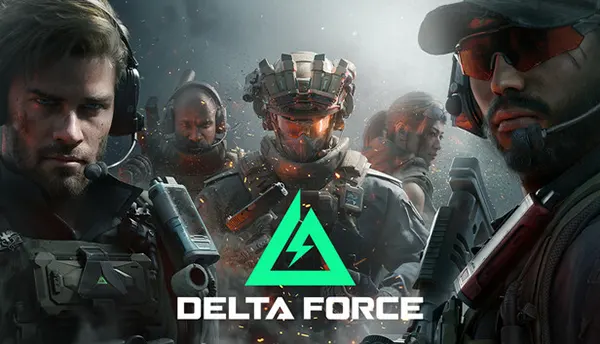
Delta Force Mobile: Is There a Real Balance Between Scale, Performance and Controls?
Delta Force Mobile arrives with ambitious goals: to bring large-scale tactical combat to smartphones without sacrificing stability or ease of play. In 2026, mobile hardware has improved significantly, yet delivering a consistent experience in a multiplayer shooter with vehicles, wide maps and dozens of players remains a technical challenge. This article breaks down how well the game handles these demands, focusing on battlefield scale, performance across devices, and control ergonomics in real gameplay conditions.
Large-Scale Combat on Mobile: Ambition Versus Reality
One of the defining features of Delta Force Mobile is its attempt to recreate expansive battlefields similar to PC and console shooters. Matches include multiple squads, vehicles, and layered objectives, which naturally increase the load on both servers and devices. The maps are designed with verticality, long sightlines and varied terrain, making positioning and teamwork more important than quick reflexes alone.
However, large-scale design introduces compromises. Draw distance, texture detail and environmental complexity are dynamically adjusted depending on the device. On high-end phones, the battlefield feels alive, with dense geometry and fluid animations. On mid-range devices, simplifications become noticeable, especially in distant objects and environmental effects.
From a gameplay perspective, scale works best when team coordination is present. Without communication, matches can feel fragmented. This highlights an important point: large maps alone do not guarantee depth — they require systems that encourage structured play, such as squad roles, spawn mechanics and clear objective flow.
How Map Design Affects Player Experience
The layout of maps in Delta Force Mobile prioritises strategic movement rather than constant firefights. Players often need to rotate between zones, use transport vehicles, and anticipate enemy positioning. This approach adds variety but may slow down pacing compared to smaller arena shooters.
Another key factor is visibility. Mobile screens limit how much information a player can process at once, so map readability becomes crucial. The developers use contrast, simplified silhouettes and UI markers to guide players, though in chaotic moments this system can still become overwhelming.
Overall, the scale is impressive for a mobile title, but it works best when supported by clear objectives and structured team play. Without that, the experience risks feeling too scattered for casual sessions.
Performance and Optimisation Across Devices in 2026
Performance remains one of the most critical aspects of any mobile shooter. Delta Force Mobile targets a wide range of devices, from flagship phones with advanced GPUs to more affordable models. As a result, the game relies heavily on adaptive graphics settings and frame rate scaling.
On modern flagship devices released in 2025–2026, the game can maintain stable frame rates at high settings, often reaching 60 FPS or higher. Thermal management is still a factor during longer sessions, but optimisation is noticeably improved compared to earlier mobile shooters of similar scale.
On mid-tier hardware, performance becomes less consistent. Frame drops can occur during intense moments with multiple players, explosions and vehicles on screen. The game compensates by lowering visual fidelity, but this may affect clarity, especially at longer distances.
Technical Trade-Offs That Shape Gameplay
To maintain playability, the game reduces certain effects dynamically. Particle density, shadow quality and physics interactions are scaled down during heavy load. While this helps preserve frame rate, it can slightly alter the feel of combat, particularly when visual feedback becomes less detailed.
Network performance is another important component. In large matches, latency spikes can affect hit registration and movement smoothness. The developers have introduced regional servers and improved netcode, but results still depend on connection stability.
In practical terms, performance is acceptable for most users in 2026, but the experience varies significantly depending on device class. Players using older hardware may need to prioritise stability over visual quality.

Control Systems: Between Accessibility and Precision
Controls are often the deciding factor in whether a mobile shooter feels playable or frustrating. Delta Force Mobile uses a customisable touch interface with options for layout adjustment, sensitivity tuning and assist features. This flexibility allows players to adapt the controls to their preferences.
Despite these options, touch input has inherent limitations. Precision aiming, recoil control and quick directional changes are more difficult compared to physical controllers or mouse input. The game compensates with aim assist and contextual actions, which help maintain accessibility without completely removing skill-based mechanics.
The learning curve is moderate. New players can quickly understand basic movement and shooting, but mastering advanced techniques — such as controlling recoil while moving or managing multiple inputs simultaneously — requires practice.
Ergonomics and Long-Term Playability
Extended sessions highlight the importance of ergonomic design. Button placement, finger reach and screen size all influence comfort. Delta Force Mobile allows players to create layouts that minimise strain, but not all devices offer the same level of convenience.
Another consideration is cognitive load. Large-scale matches require players to monitor minimaps, objectives, teammates and enemies at the same time. The interface attempts to organise this information clearly, though it can still feel crowded during intense moments.
In the long run, the control system strikes a workable balance. It may not offer the precision of traditional platforms, but it provides enough flexibility to support both casual play and more competitive sessions, especially for players willing to customise their setup.